
Electric Fencing for Commercial Properties
Commercial properties often have different perimeter, access, parking, and operating requirements. A suitable electric fence solution should be planned around the property’s existing boundary, entrances, layout, and security objectives.
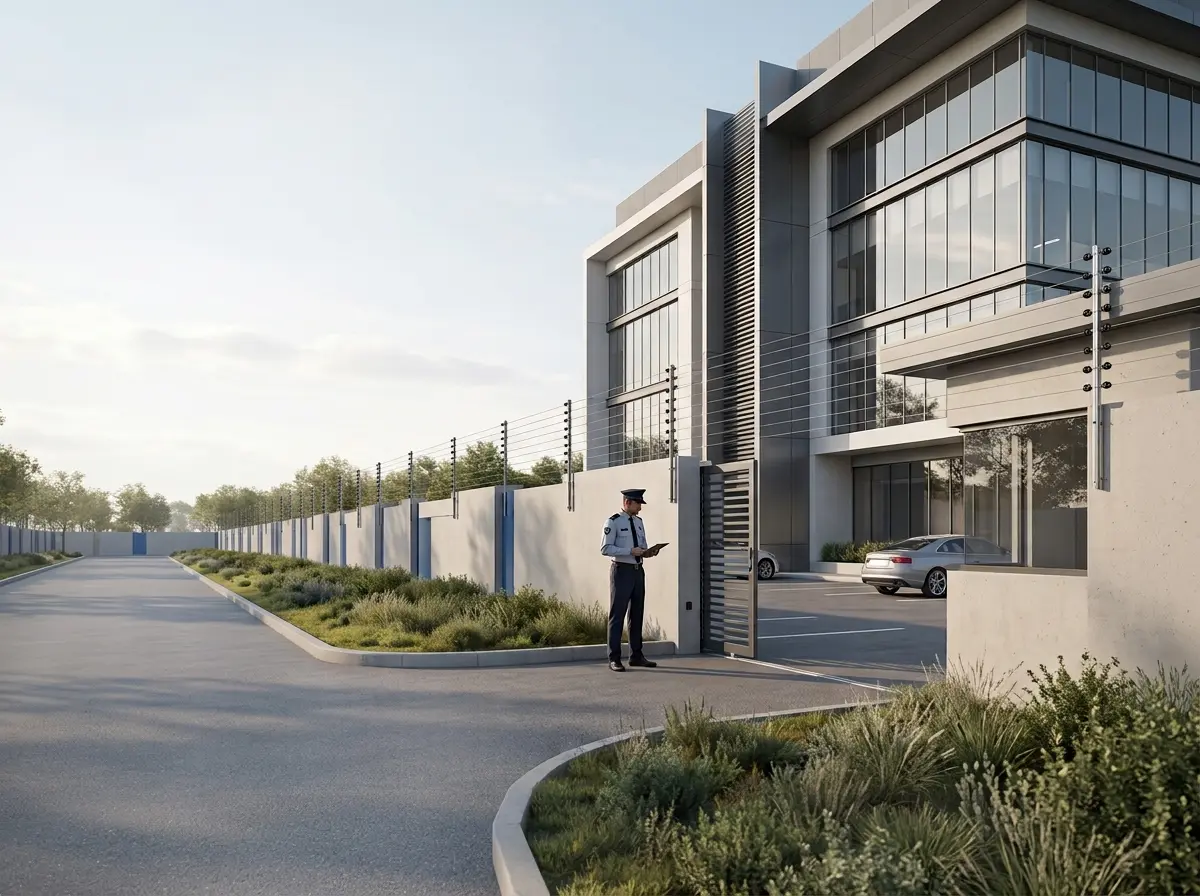
Is Electric Fencing Suitable for Your Commercial Property?
Electric fencing may be considered for different commercial environments depending on the property layout, existing boundary, security objectives, access points, parking and vehicle movement, pedestrian movement, site conditions, and maintenance requirements.
A professional assessment can determine the appropriate approach based on:
- Property layout and perimeter length
- Existing boundary walls, fences, or mixed structures
- Number and type of access points
- Vehicle and pedestrian movement patterns
- Parking area requirements
- Site conditions and environmental factors
- Security objectives and existing systems
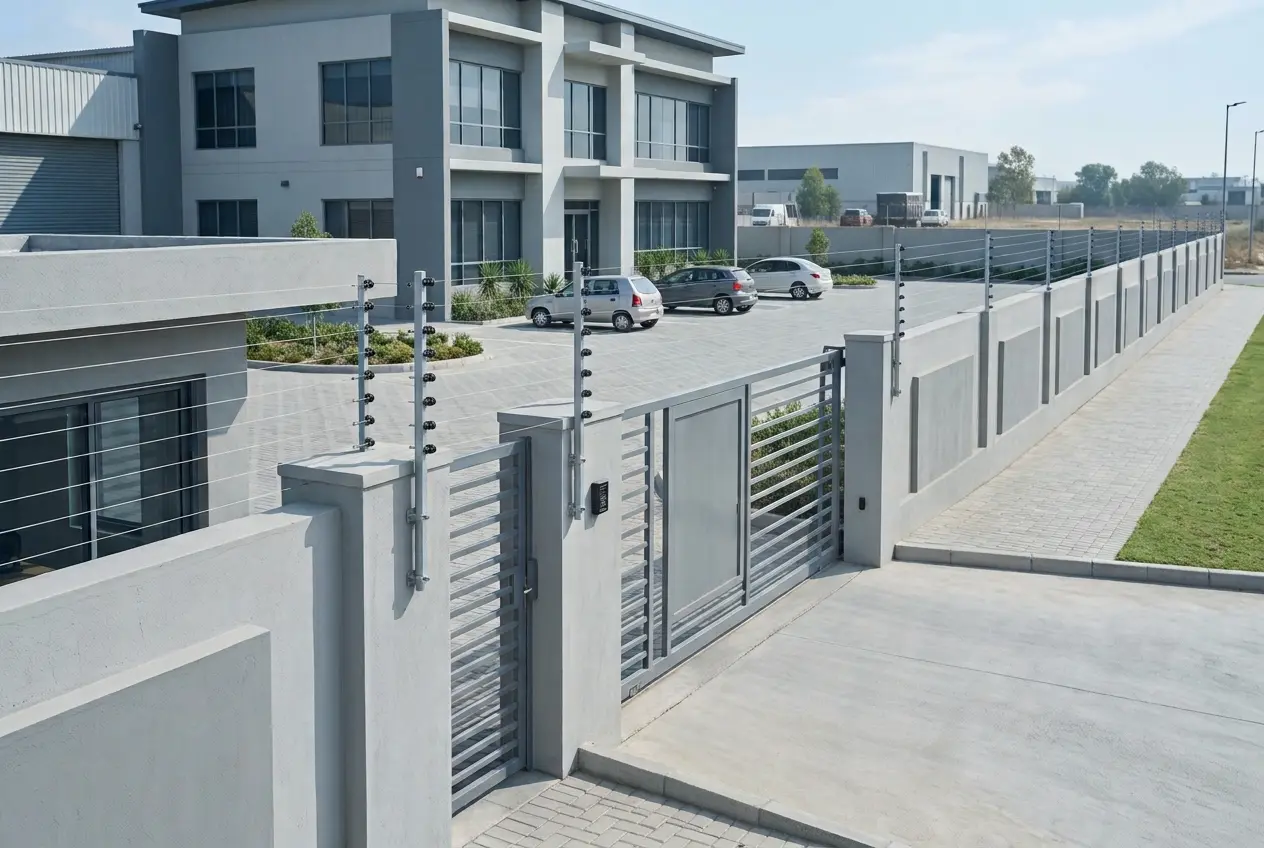
How We Plan a Commercial Electric Fence
Commercial electric fencing is planned around the actual property — the perimeter, existing structures, entrances, parking, and daily operational movement. The configuration should reflect how the site is used, not a generic template.
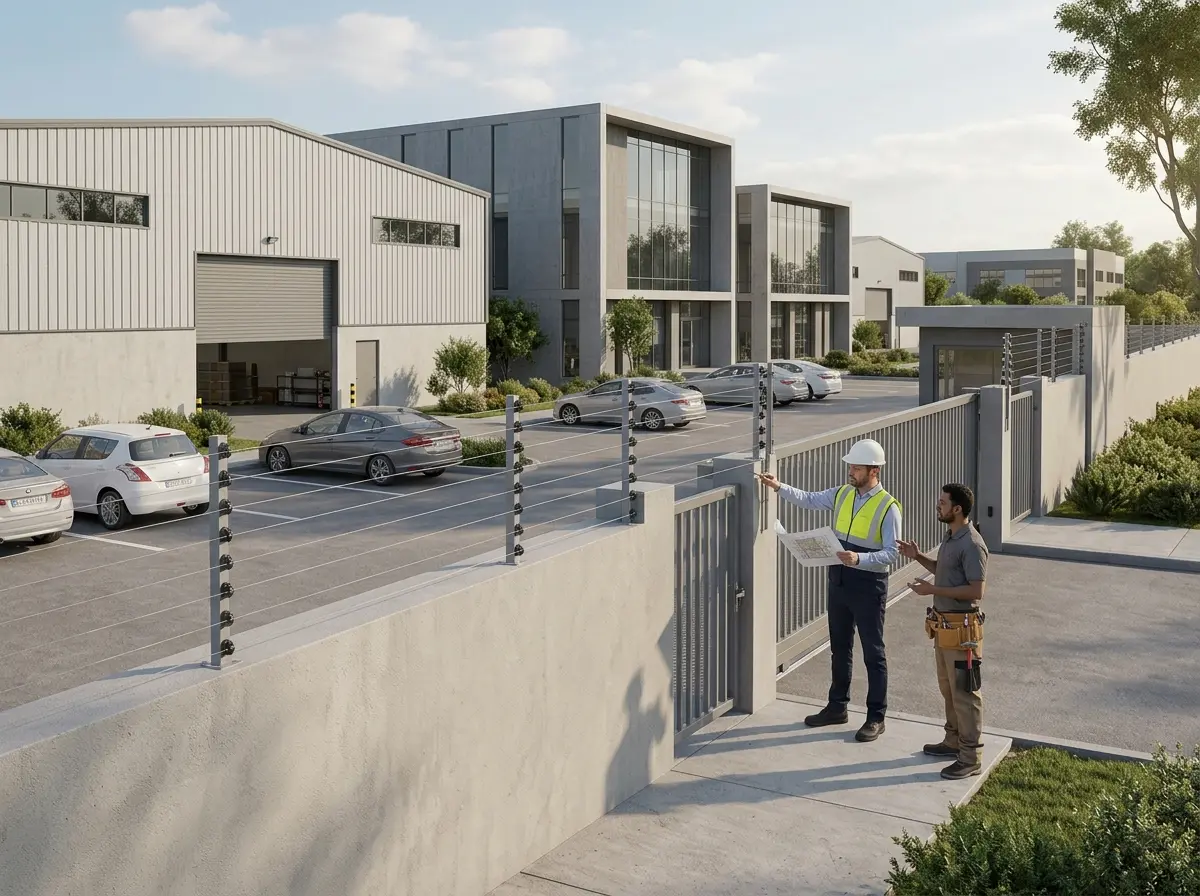
Commercial Perimeter, Gates & Daily Operations
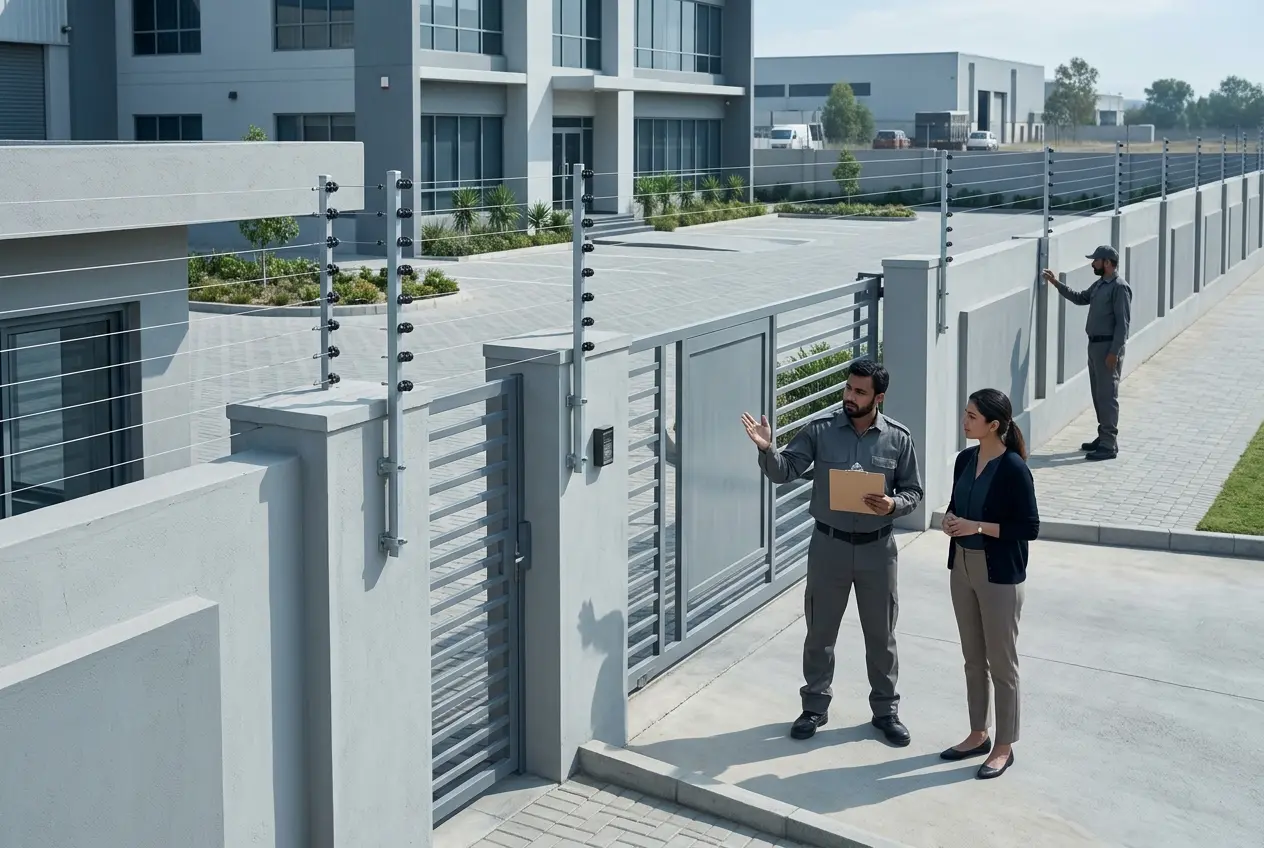
Existing commercial boundaries may include concrete walls, metal fencing, or a mix of boundary types. Whether an electric fence can be configured around them depends on the existing structure and its condition. Gates, entrances, parking, and daily business movement are planned as part of the complete perimeter.
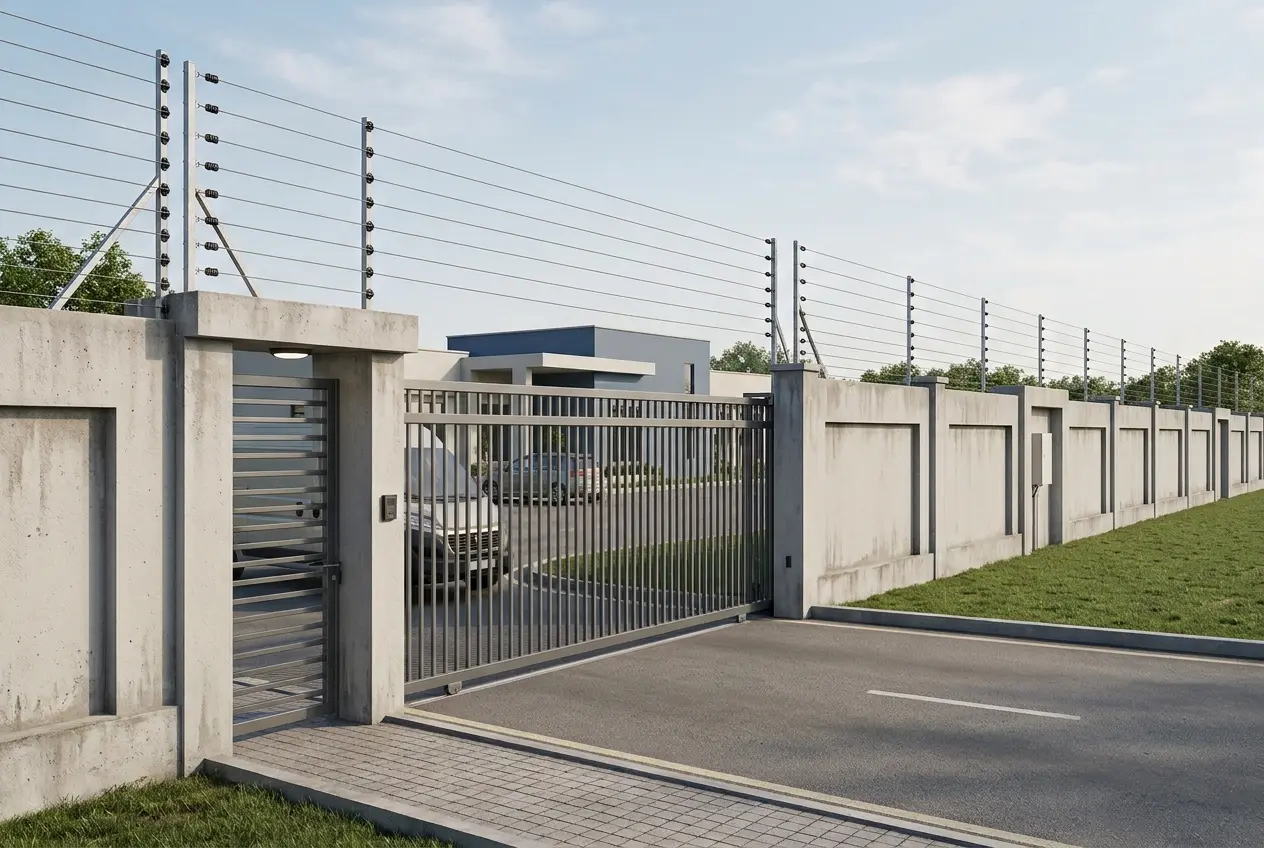
Meet Core Shield
Core Shield provides perimeter security solutions designed around the physical layout and requirements of each property, including commercial premises, office buildings, retail properties, and business compounds. We assess the site, recommend a configuration, and support the system through installation, maintenance, and repair.
[Add verified company details: years in operation, team information, commercial service experience, and service coverage.]
Recent Commercial Property Projects
[Verified Project Information Required — Replace with real Core Shield commercial project photography and verified details before publishing.]

Perimeter Electric Fence
Electric fence installation around a commercial office perimeter with existing wall sections incorporated and gate integration.

Multi-Entrance Perimeter
Perimeter electric fence configured around a commercial plaza with multiple vehicle and pedestrian access points.

Customer-Access Perimeter
Electric fence installed around a retail property with customer parking and staff access considerations.
How Much Does Electric Fencing for a Commercial Property Cost?
Commercial electric fence costs depend on perimeter length, boundary type, existing walls or fences, number and type of gates, number of access points, supporting structures required, system configuration, energizer requirements, conductors, insulators, grounding requirements, and site conditions.
Other factors include vegetation, installation complexity, existing system condition, monitoring requirements, and maintenance requirements. A site assessment provides the basis for a project-specific estimate.