
Electric Fence vs Traditional Fencing: Which Is Right for Your Property?
The best choice depends on the property’s purpose, existing boundary, security concerns, privacy requirements, access arrangements, budget, and maintenance expectations. Traditional fencing covers several materials and designs, so this comparison addresses general differences rather than claiming every conventional fence behaves the same way.
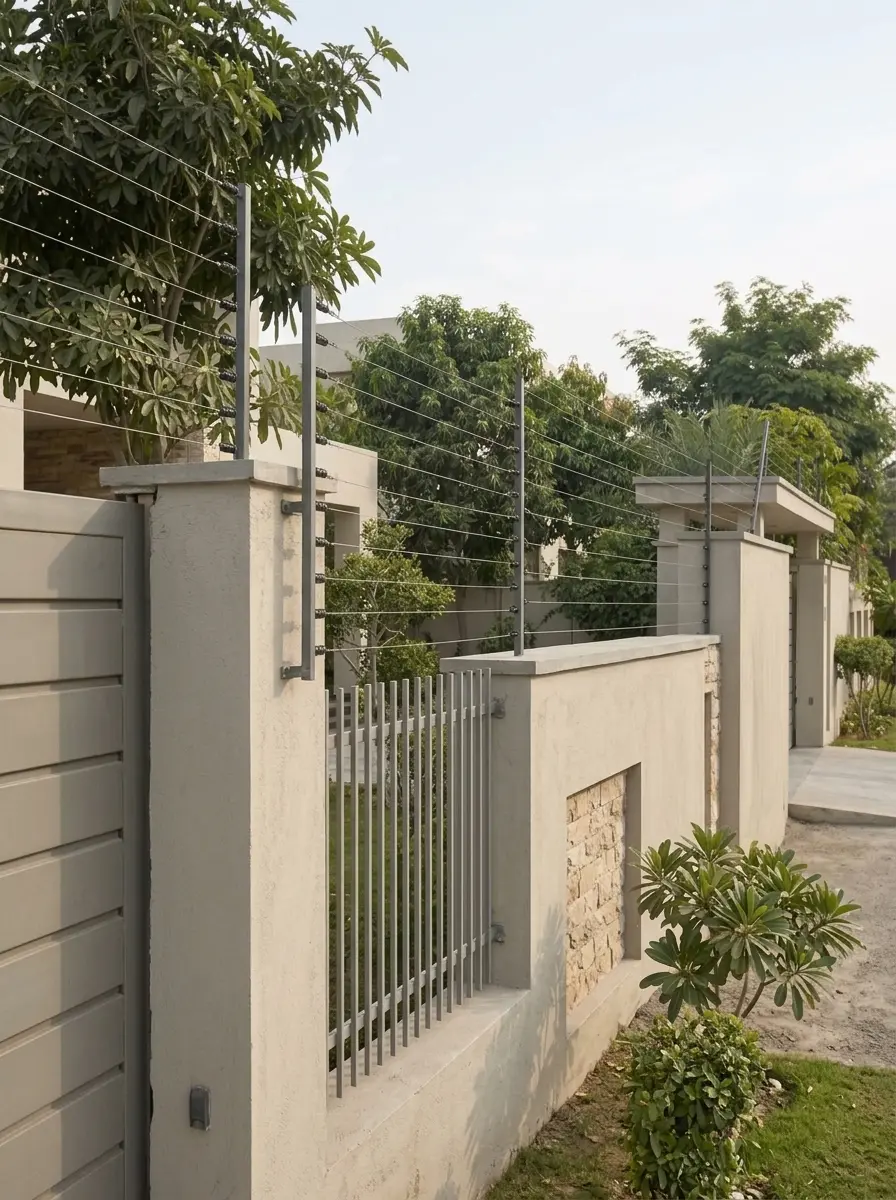

What's the Main Difference?
Traditional fencing generally creates a physical boundary and may serve purposes such as separation, privacy, access control, or containment, depending on material and design. Electric fencing uses electrical pulses in a purpose-designed fence system. Depending on its configuration, it may be used for deterrence, animal management, or as an additional perimeter security measure. The two approaches can overlap, but they do not necessarily serve identical purposes.
Traditional Fencing
Physical boundary, with performance and privacy varying by material and design.
Electric Fencing
Electrified system requiring appropriate equipment, safety planning, and ongoing inspection.
Combined Approach
An existing physical boundary may sometimes be complemented by a suitable electric fencing system. This is not always necessary or suitable.
Electric Fencing vs Traditional Fencing: Key Differences
A factual comparison across the factors that most often influence the decision.
| Comparison Factor | Electric Fencing | Traditional Fencing |
|---|---|---|
| Primary function | Provides an electrified boundary or supplementary deterrent, depending on system design. | Creates a physical boundary, with functions varying by design. |
| How it works | Uses an energizer and conductors to deliver electrical pulses. | Relies primarily on a physical structure. |
| Physical barrier | Depends on the overall fence design; electrified conductors alone may not provide the same physical separation. | Can provide substantial physical separation depending on material and construction. |
| Privacy | Typically limited when used alone. | Solid walls or panels can provide privacy. |
| Power requirement | Requires a suitable power arrangement for active operation. | Conventional passive fencing generally does not require power. |
| Installation | Requires system planning, appropriate equipment, and electrical safety considerations. | Depends on materials, foundations, terrain, and construction requirements. |
| Maintenance | Includes electrical system checks, component inspections, and site-condition monitoring. | Generally focuses on physical condition, corrosion, damage, and structural upkeep. |
| Safety | Requires careful planning around electrical hazards, access, signage, and applicable requirements. | Safety concerns depend on material, height, sharp edges, structural stability, and site use. |
| Security contribution | May provide an additional deterrent as part of a suitable perimeter strategy. | Provides physical separation; security performance depends on design and condition. |
| Cost | Depends on system configuration, boundary conditions, equipment, and installation. | Depends on material, dimensions, construction, and site conditions. |
| Appearance | Varies by installation and system design. | Wide range of styles, finishes, and materials. |
| Best fit | Situations where an electrified system meets the property's needs and safety requirements. | Situations where a physical boundary, privacy, or containment is the primary need. |
Consider Traditional Fencing
When physical separation or privacy is the main requirement.
Consider Electric Fencing
When an appropriately designed electrified boundary or supplementary deterrent meets the site's requirements.
Consider a Combined System
When both physical boundary functions and additional deterrence are needed, subject to safety and site suitability.
How Do Electric and Traditional Fences Work?
Each category operates on a different principle. Understanding this helps explain why they are not always direct substitutes.
Traditional Fencing
Conventional fencing generally uses a constructed physical barrier to define or separate an area. Common examples include:
- Metal panel fencing
- Chain-link fencing
- Timber fencing
- Masonry boundary walls
- Other non-electrified boundary structures
These are examples rather than identical products — materials and designs vary widely.
Electric Fencing
An electric fence uses an energizer, conductors, insulators, grounding arrangements, and other suitable components to create an electrified system.
- Energizer produces controlled pulses
- Conductors carry the pulse along the fence line
- Insulators isolate conductors from supports
- Grounding provides the return path
- Additional components depend on the configuration
Which Option Provides Better Perimeter Security?
Effective perimeter security depends on multiple factors, not one fence category alone. There is no automatic winner.
Traditional Fence Security
Physical separation, controlled entrances, and appropriate structural design help define a boundary. Security performance depends on height, materials, condition, and layout.
Electric Fence Security
A suitable electric fencing system may add an electrified deterrent, subject to design, installation, operation, and legal requirements.
Combined Security
A physical boundary and an electric fencing system may complement one another where the design allows. CCTV, lighting, and access control may also be considered as part of broader planning.
Security planning should consider the property’s risks, layout, visibility, gates, and access requirements. A combination of measures is often more appropriate than relying on a single category.
How Do Installation Requirements Differ?
Both require planning, but the scope of work and preparation differ.
Installing Traditional Fencing
- Material selection
- Property dimensions
- Terrain and ground conditions
- Structural support requirements
- Gates and access points
- Construction work
- Local requirements where applicable
Installing Electric Fencing
- Property and boundary assessment
- Suitable system configuration
- Existing mounting structure suitability
- Equipment selection
- Power and grounding considerations
- Safety planning
- Warning signs and access arrangements
- Professional installation and system checks
An electric fence may be installed as a standalone purpose-designed arrangement or as part of a suitable existing boundary, depending on the application. Mounting on any wall or fence is not automatically safe or permitted — suitability must be assessed.
Is Electric Fencing More Expensive Than Traditional Fencing?
There is no universally accurate answer without defining the fence types, boundary length, materials, and installation requirements.
Traditional Fencing — Cost Factors
- Fence material
- Boundary dimensions
- Structural supports
- Foundation or construction requirements
- Gates
- Labor
- Finishing and upkeep
Electric Fencing — Cost Factors
- System equipment
- Boundary dimensions
- Existing structure suitability
- Mounting and installation requirements
- Power-related components
- Safety provisions
- Inspection and maintenance needs
Which Fence Requires More Maintenance?
Maintenance needs depend on construction, environment, system type, and usage. Neither category is universally maintenance-free.
Traditional Fencing
- Corrosion
- Loose or damaged panels
- Structural deterioration
- Weather exposure
- Gate wear
- Timber or surface treatment, where relevant
Electric Fencing
- Conductors and insulators
- Energizer and system condition
- Visible damage
- Vegetation and environmental obstructions
- Warning signs
- Appropriate professional performance checks
What Safety Factors Should You Consider?
Both approaches have safety considerations, but the risks differ. Applicable local regulations and standards must be checked for the specific property and location. Traditional fencing is not inherently risk-free.
Electric Fencing Safety
- Electrical shock hazards
- Suitable installation and equipment
- Warning signs
- Children, visitors, workers, and animals
- Gates and access points
- Professional electrical work
- Manufacturer instructions
- Applicable local regulations and standards
Traditional Fencing Safety
- Sharp edges or protrusions
- Structural stability
- Unsafe gates
- Visibility and access
- Material deterioration
- Relevant property and construction requirements
Electric Fence or Traditional Fence for Your Property?
Decision factors for different property types. Each scenario should be assessed on its own merits.
Residential Properties
Privacy, existing boundary walls, entrances, household access, and whether an electrified system is appropriate for the site and its users.
Residential OptionsFarms & Agricultural
Boundary size, livestock or animal-management needs, terrain, and the difference between physical containment and electrified arrangements.
Farm OptionsCommercial Properties
Business access, visitors, parking, boundary appearance, and specific security requirements.
Commercial OptionsWarehouses
Storage yards, loading areas, vehicle access, and perimeter management.
Warehouse OptionsIndustrial Properties
Large boundaries, operational access, maintenance planning, and coordination with other security systems.
Industrial OptionsSchools & Educational
Child safety, public access, and applicable restrictions require heightened care. Professional assessment and relevant requirements are essential.
School OptionsWhen Is Each Option More Suitable?
These are decision factors, not universal rules. Each property should be assessed individually.
When Traditional Fencing May Be Better
- Privacy is the primary objective.
- A solid physical barrier is needed.
- An electrified system is unsuitable or restricted at this site.
- The property requires a particular architectural appearance.
- The owner does not want an active electrical system.
- The intended use is adequately addressed by an appropriate conventional fence.
When Electric Fencing May Be Worth Considering
- A property owner is reviewing additional perimeter deterrence options.
- An existing boundary may support a suitable supplementary system.
- A site has specific access-control and security planning needs.
- The intended application is compatible with appropriate electric fencing equipment.
- The property owner can meet relevant safety, operational, and maintenance requirements.
Using Electric and Traditional Fencing Together
A suitable conventional boundary and electric fencing system may serve complementary purposes where the design allows.
Where an existing physical boundary is present, it may form the base of the perimeter plan. A suitable electric fencing system may then be added above or integrated with the boundary, subject to site assessment and safety requirements.
- The existing physical boundary
- Whether the structure is suitable for the proposed arrangement
- Mounting and system design considerations
- Gates and entry points
- Warning signs
- Maintenance access
- Safety and legal requirements
The diagram above is conceptual. It is not a construction specification. Suitability, mounting requirements, and safety provisions must be determined through a professional site assessment.
How to Choose Between Electric and Traditional Fencing
A practical framework to help you evaluate your situation.
What is your main objective?
Is the primary need privacy, physical separation, containment, perimeter deterrence, or a combination?
Do you already have a boundary?
Consider whether a suitable wall or fence exists and what condition it is in.
Who uses the property?
Consider residents, employees, visitors, children, contractors, animals, and other people who may approach the boundary.
What are the site conditions?
Consider terrain, vegetation, access points, nearby structures, and environmental exposure.
What maintenance can be supported?
Consider the ongoing inspection and upkeep needs of each approach.
What safety or regulatory requirements apply?
These must be checked for the specific property and location.

Consider Traditional Fencing
When physical separation or privacy is the main priority.
Consider Electric Fencing
When an electrified system is appropriate for the intended application and site requirements.
Consider a Combined Approach
When both a physical boundary and additional electrified functionality may be useful and suitable.
Electric Fence vs Traditional Fence FAQs
Explore the Right Perimeter Fencing Approach
The right boundary solution depends on property needs, existing structures, access requirements, and safety considerations. A site assessment helps determine the appropriate approach — whether traditional, electric, or a combination of both.
For a specific assessment of your property, see the installation service page or use the site contact route. Verified service areas apply.